
Wild Animals in Sweden
Sweden is home to a rich diversity of wild mammals, from moose and brown bears to wolves, lynx and beavers.
Below you’ll find an overview of some of the most iconic wild animals in Sweden, where they live and how encounters typically occur in nature. Population estimates are based on national wildlife monitoring and long-term research.
Want to experience Sweden’s wildlife in real life?
We guide small groups to the best places to see wild animals in Sweden – slowly, respectfully and with experienced local guides.
→ Get invited to our Secret Adventures 🤫 (free, invitation only)
Sweden’s Most Iconic Wild Animals
These species are closely tied to Sweden’s forests and wilderness and shape much of the country’s wildlife experience.
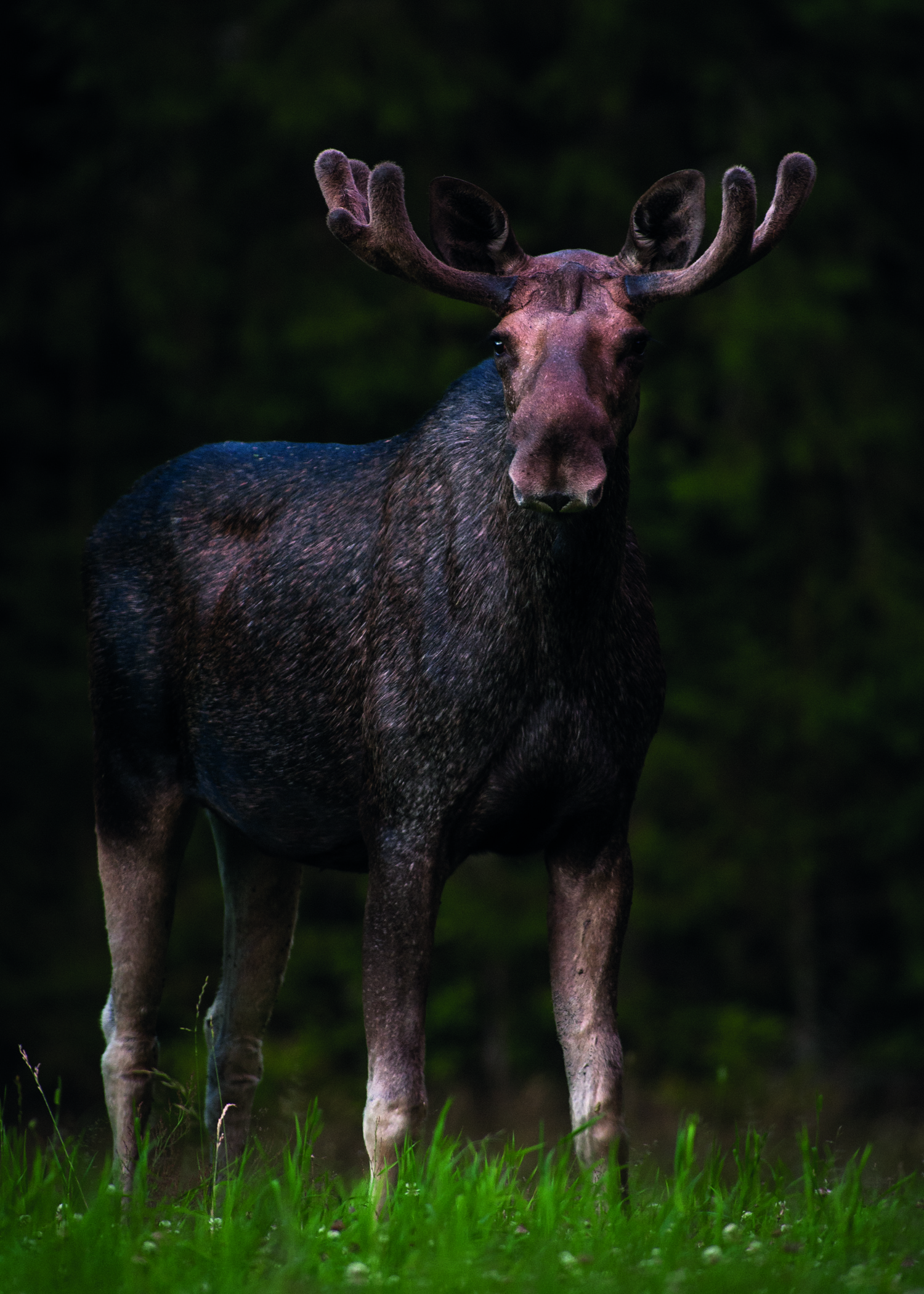
Photo of Moose in Sweden: Marie Mattsson
Moose in Sweden
The moose is the largest land mammal in Sweden and lives across most forested parts of the country. Moose are most active at dawn and dusk, especially in spring and autumn.
Moose are solitary animals that feed on both land and aquatic vegetation. Encounters are never guaranteed and usually brief, often happening at a distance, sometimes from a car.
Status in Sweden: The moose population has declined significantly since the 90’s, mainly due to increased hunting pressure. Numbers vary regionally and are influenced by hunting, traffic and predators.
Estimated population in Sweden: Approximately 250,000 individuals (summer population).
How to see moose in the wild
Most active at sunrise and sunset
Often near forest edges, clearings and other open areas
Walk quietly without talking at all for long periods to increase your chances
Local knowledge greatly increases the chance of meaningful encounters
🔗 See this species on a wildlife tour
Facts about Moose in Sweden
Scientific name: Alces alces
Height: 170 – 210 cm (at shoulder)
Weight: 200 – 360 kg (female), 380 – 800 kg (male)
Lifespan: 12 – 25 years (but most are shot at early age)
Population in Sweden: The Summer population is estimated to be 300,000–400,000 moose. Around 80,000 are hunted each Autumn.
Natural predators: Man (hunting + traffic) Wolf, Brown Bear.
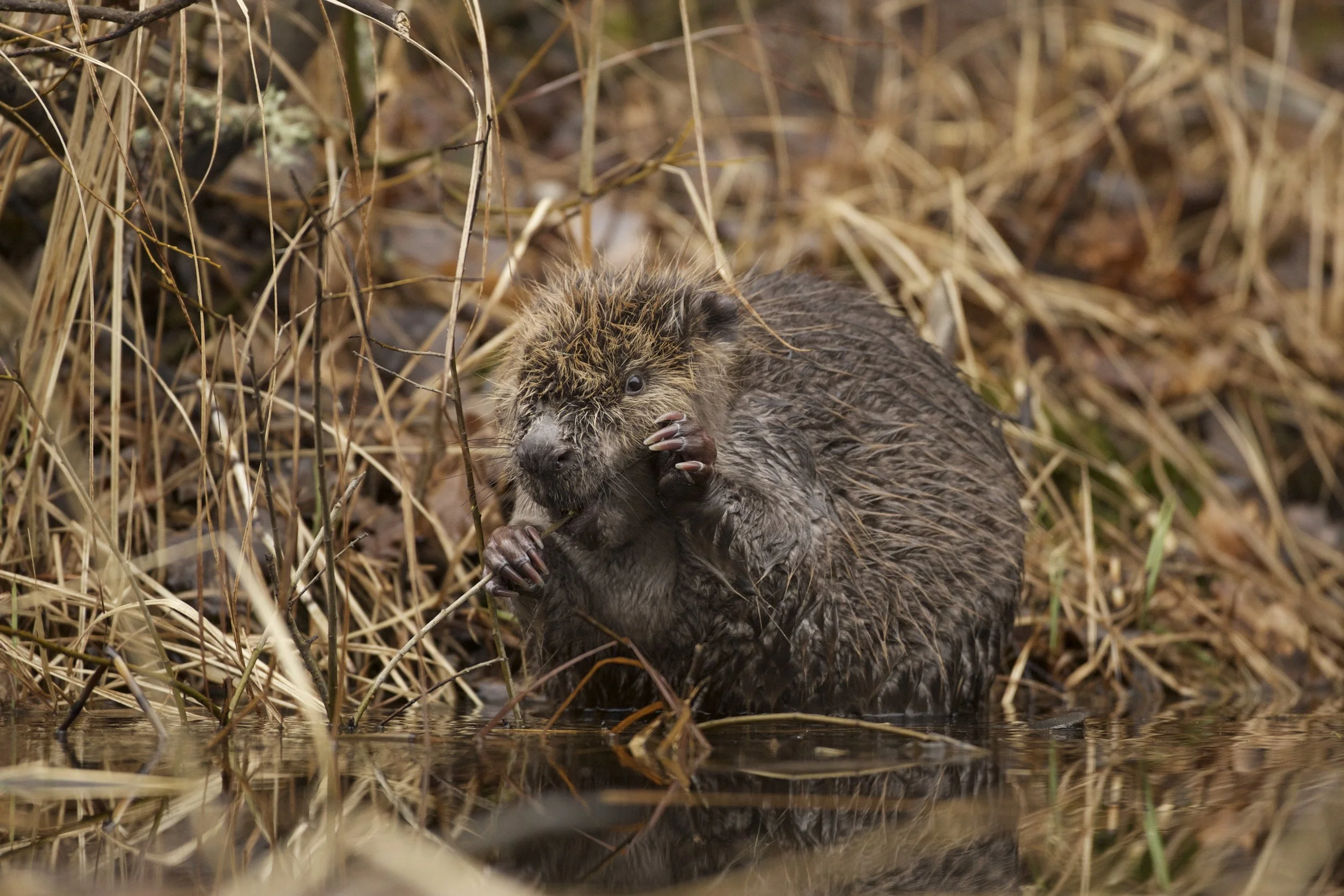
Photo of Beaver in Sweden: Anders Öhlund
Beavers in Sweden
The Eurasian beaver lives along rivers, lakes and wetlands across much of Sweden. Beavers are most active at dusk and during the night, and are often noticed through movement, sounds or fresh signs along the water rather than direct sightings.
Beavers spend most of their time close to water and build lodges and dams that shape their surroundings. Encounters are quiet and require patience, especially while canoeing during calm summer evenings.
Status in Sweden: Beavers were once extinct in Sweden but were reintroduced over a century ago. Since then, the population has recovered strongly and is now well established across large parts of the country.
Estimated population in Sweden: At least 150,000 individuals.
How to see beavers in the wild
Most active at dusk and during the night
Found along lakes, rivers and streams
Often detected by splashes, ripples and gnaw marks
Approaching quietly by canoe or boat will increase your chances. Waiting near a lodge at sunset is another option
Local knowledge greatly increases the chance of meaningful encounters
🔗 See this species on a wildlife tour
Facts about Beavers in Sweden
Scientific name: Castor fiber
Weight: 11 – 30 kg (Adult)
Body length: 80 – 100 cm (without tail)
Tail length: 25 – 50 cm
Lifespan: 16 – 24 years
Population in Sweden: The population is estimated to be at least 150,000.
Natural predators: Man (hunting + traffic), Wolf, Lynx
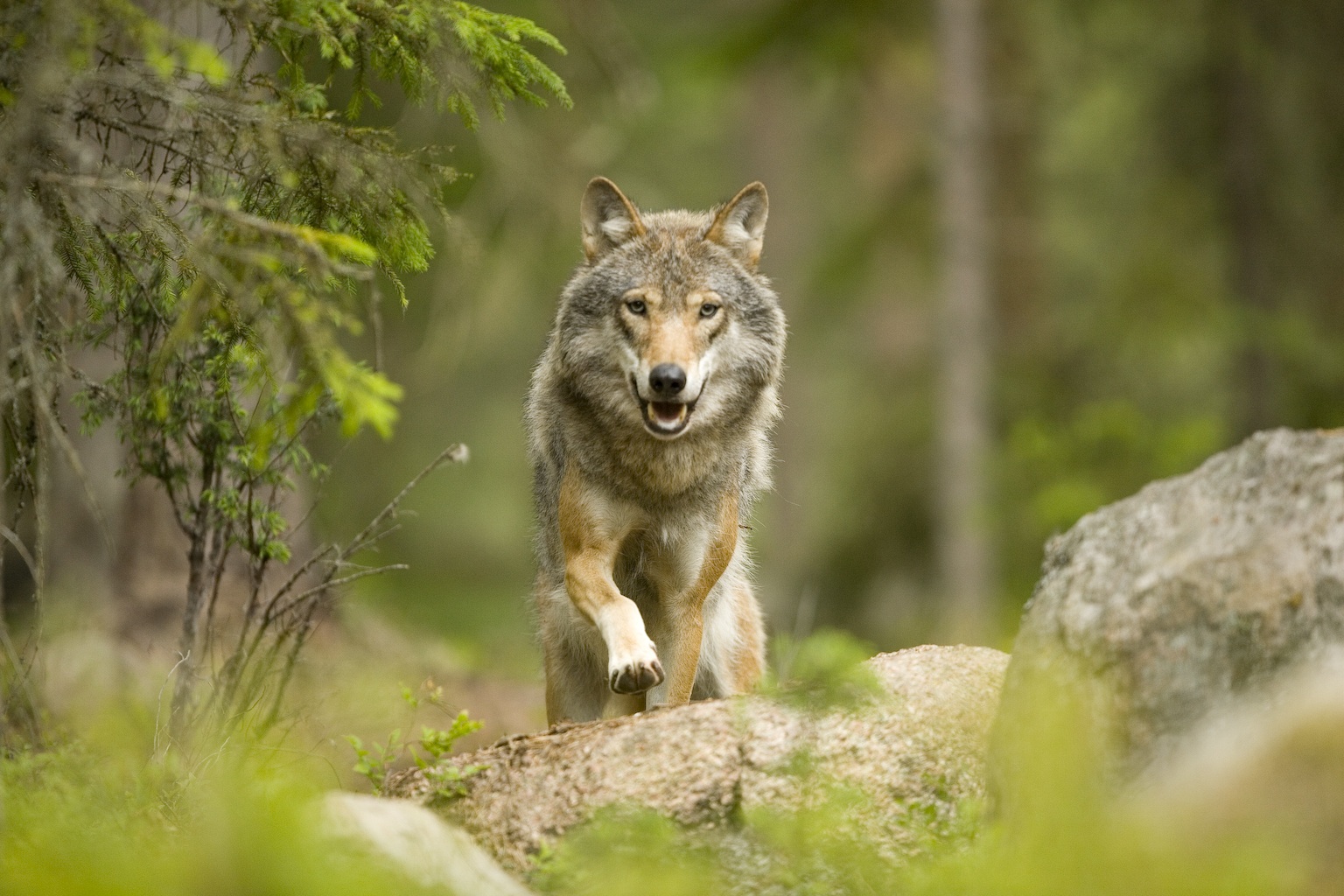
Photo of Wolf in Sweden: Glenn Mattsing
Wolves in Sweden
The grey wolf lives mainly in forested areas of south-central Sweden, where large territories and low human presence allow them to move largely unnoticed. Wolves are highly elusive, and most encounters are indirect – through tracks, scent marks or distant howls rather than sightings.
Wolves generally avoid people and attacks on humans are extremely rare. They can, however, pose a risk to dogs and livestock, especially in areas where wolves and human activity overlap.
Status in Sweden: Wolves were once extinct in Sweden but naturally recolonised from the Finnish–Russian population during the late 20th century. Today, the population remains small and closely monitored, and is affected by licensed hunting and illegal killing.
Estimated population in Sweden: A few hundred individuals.
How to see wolves in the wild
Found mainly in south-central Sweden (e.g. Värmland, Dalarna, Västmanland, Örebro, Gävleborg)
Live in large territories with dense forest cover
Rarely seen; most signs are tracks, droppings or howls
Winter tracking in snow can make their presence easier to detect
Local knowledge greatly increases the chance of meaningful encounters
🔗 See this species on a wildlife tour
Facts about Wolves in Sweden
Scientific name: Canis lupus
Height: 80 – 90 cm (at shoulder)
Weight: 35-45 kg (female), 45-55 kg (male)
Body length: 140-180 cm (with tail, male), 140-165 cm (with tail, female)
Tail length: 50 cm (male), 35-40 cm (female)
Population in Sweden: The population is estimated to be 400 – 500 (Winter 2014/2015).
Predators: Man (hunting + traffic), other Wolves
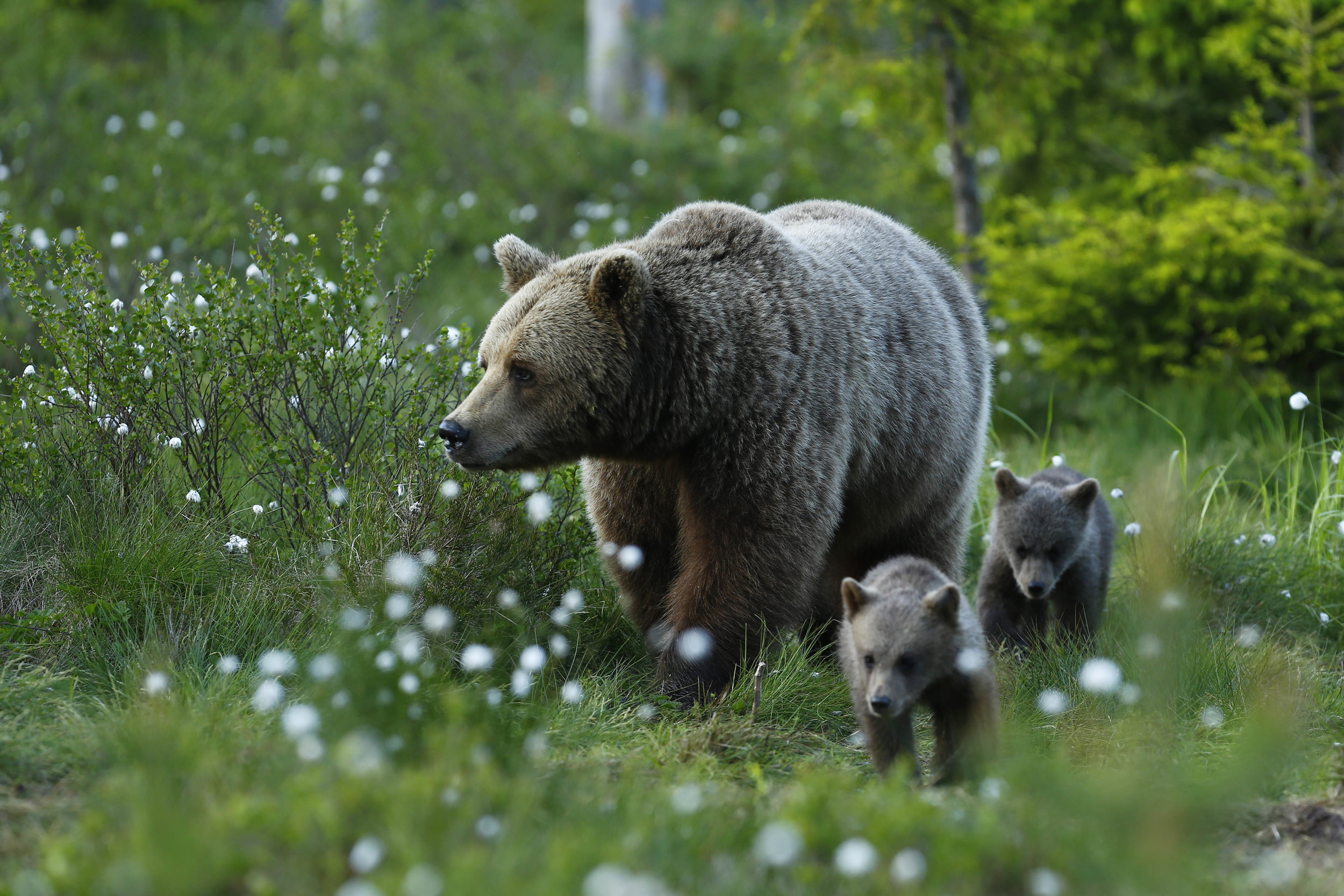
Photo of Brown Bear female with two cubs: Håkan Vargas
Bears in Sweden
The brown bear is Sweden’s largest carnivore and lives mainly in forested areas of central and northern parts of the country. Bears are shy and generally avoid people, which means most encounters are brief and happen at a distance.
The Swedish brown bear population is well established and spread across large forest landscapes. Bears do not normally pose a threat to humans but should always be respected and observed from a safe distance.
Status in Sweden: The brown bear population has increased over recent decades and is now considered stable under regulated wildlife management.
Estimated population in Sweden: Approximately 2,800 individuals.
How to see bears in the wild
Found mainly in central and northern Sweden
Most active from late spring to autumn
Often seen during evening or early morning
In autumn, bears may also forage in mountain areas
Guided bear watching tours increase the chance of safe and responsible encounters
🔗 See this species on a wildlife tour
Facts about Bears in Sweden
Scientific name: Ursus arctos
Height: 100 – 280 cm, up to 135 cm to the shoulder
Weight: 60 – 100 kg (female) 100 – 250 kg (male)
Lifespan: 20 – 30 years
Hibernation period: October/November – April/May
Mating period: May – June
Breeding period: January – February
Other Wild Mammals in Sweden
In addition to the large predators and herbivores, Sweden is home to several other fascinating mammals that contribute to the richness of its ecosystems.

Photo of an Arctic Fox in Sweden by Nicolas Néreau
Arctic fox
The Arctic fox lives in Sweden’s mountain regions, where it is adapted to cold and highly seasonal environments.
Arctic foxes are rare and difficult to observe, and encounters usually happen at a distance in alpine areas of north-western Sweden.
Seeing an Arctic fox in the wild often requires patience and travel into remote mountain landscapes.
Status in Sweden: The Arctic fox remains vulnerable in Sweden. Population size fluctuates depending on food availability and ongoing conservation efforts in mountain areas.
Estimated population in Sweden: A few hundred individuals, varying strongly between years.
How to see Arctic foxes in the wild
Found in mountain areas of north-western Sweden
Most often seen in alpine and tundra environments
Encounters are rare and usually at a distance through binoculars
Summer offers better access to mountain roads and viewpoints
Guided tours can help locate known den areas with minimal disturbance
Facts about Arctic Foxes in Sweden
Scientific name: Vulpes lagopus
Length: 50 – 85 cm (plus tail 25-50 cm)
Weight: 3 – 8 kg
Lifespan: about 5 years
Population in Sweden: A few hundred. The Arctic Fox population has increased lately but varies greatly from season to season depending on access to food which mainly consists of lemmings and other rodents.
Natural predators: Red fox.
-
The Arctic fox is also known as the white fox, polar fox or snow fox. All names refer to the same species, Vulpes lagopus.
-
Arctic foxes occur in two colour variations: white and blue. The white variation changes from white in winter to grey-brown in summer, while the blue variation remains darker throughout the year. Most Arctic foxes in Sweden belong to the white variation, which offers better camouflage in snowy environments.
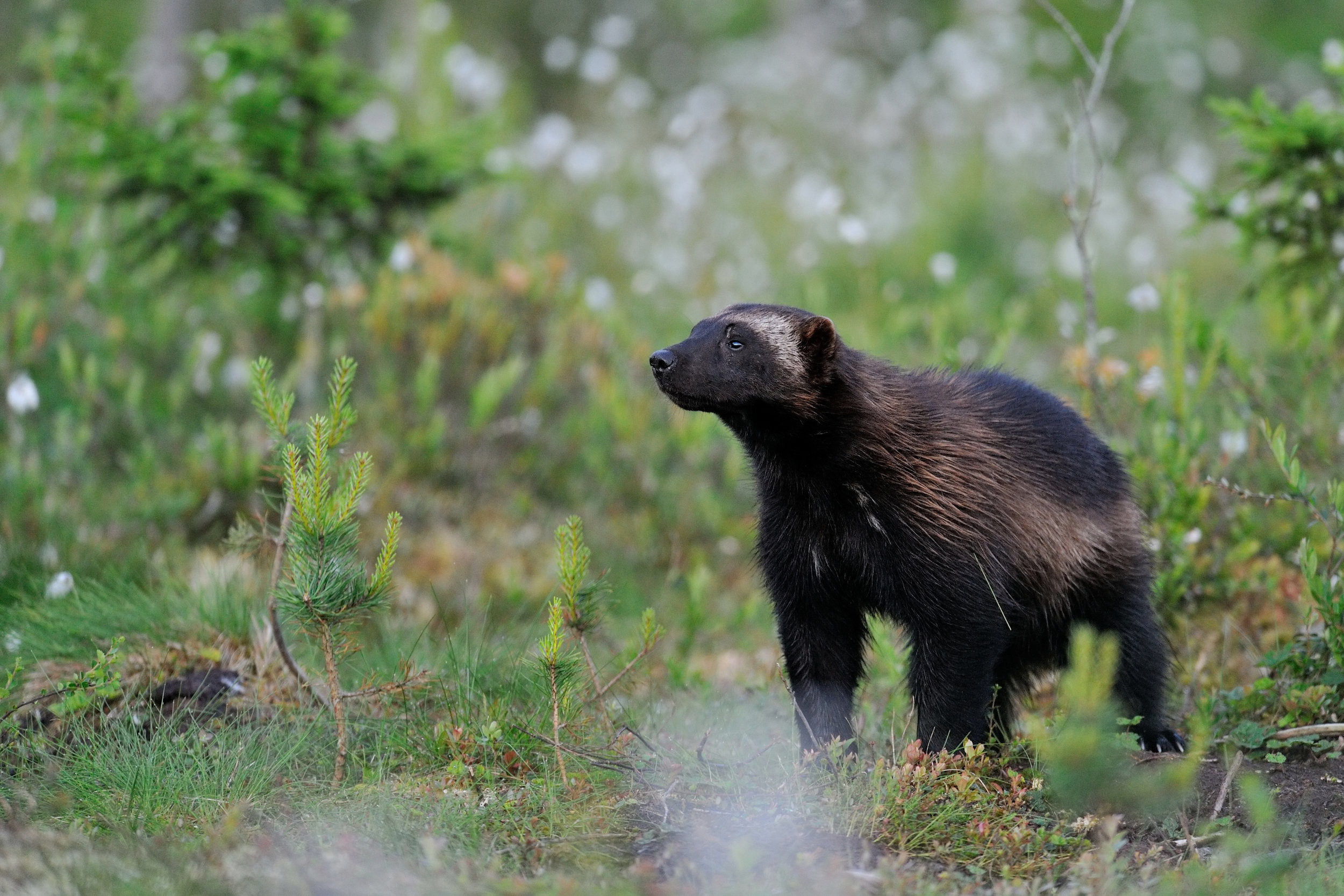
Photo of a Wolverine by Erik Mandre
Wolverines in Sweden
The wolverine lives in remote mountain and forest areas in northern and central Sweden and is one of the country’s most elusive mammals. Wolverines are rarely seen, and their presence is most often revealed through tracks in snow and feeding remains.
Wolverines roam over very large areas and spend much of their time alone, which makes encounters uncommon even in places where they are present. Seeing a wolverine in the wild is often a matter of timing and luck rather than location.
Status in Sweden: The wolverine population has increased in recent years and is slowly expanding southwards into new forested regions.
Estimated population in Sweden: Approximately 600–700 individuals.
🔗 Wolverine watching is occasionally offered through WildSweden’s Secret Adventures (invitation only).
→ Sign up to receive invitations
How to see wolverines in the wild
Found mainly in mountain and forest areas of northern and central Sweden
Rarely seen; most signs are tracks, feeding remains or distant movement
Winter conditions make tracking in snow easier
Often spotted by chance while skiing or traveling in remote areas
Local knowledge greatly increases the chance of meaningful encounters
Facts about Wolverines in Sweden
Scientific name: Gulo gulo
Length: 95 – 100 cm
Height: 40 cm (at the withers)
Weight: 12 – 18 kg (male), 8 – 12 kg (female)
Lifespan: 10 – 12 years
Population in Sweden: An estimated 600-700 individuals. The population has grown in recent years and also spread South to forested areas in Central Sweden like Gävleborg and Dalarna.
Natural predators: Man (protective and illegal hunting)
-
Wolverines have a reputation for being aggressive, but they are primarily opportunistic feeders. They mainly scavenge from carcasses and eat a wide range of food depending on availability. In certain conditions, especially in deep snow, they can take prey larger than themselves.
-
Wolverines are territorial and use large, gender-specific territories. Male and female territories overlap, and family bonds can remain strong even after young wolverines leave their mother.
-
Yes. The wolverine is a real animal (Gulo gulo) that lives in northern parts of Europe, Asia and North America. The Marvel character Wolverine was named after the animal because of its reputation for strength and toughness, but real wolverines are shy and avoid humans.
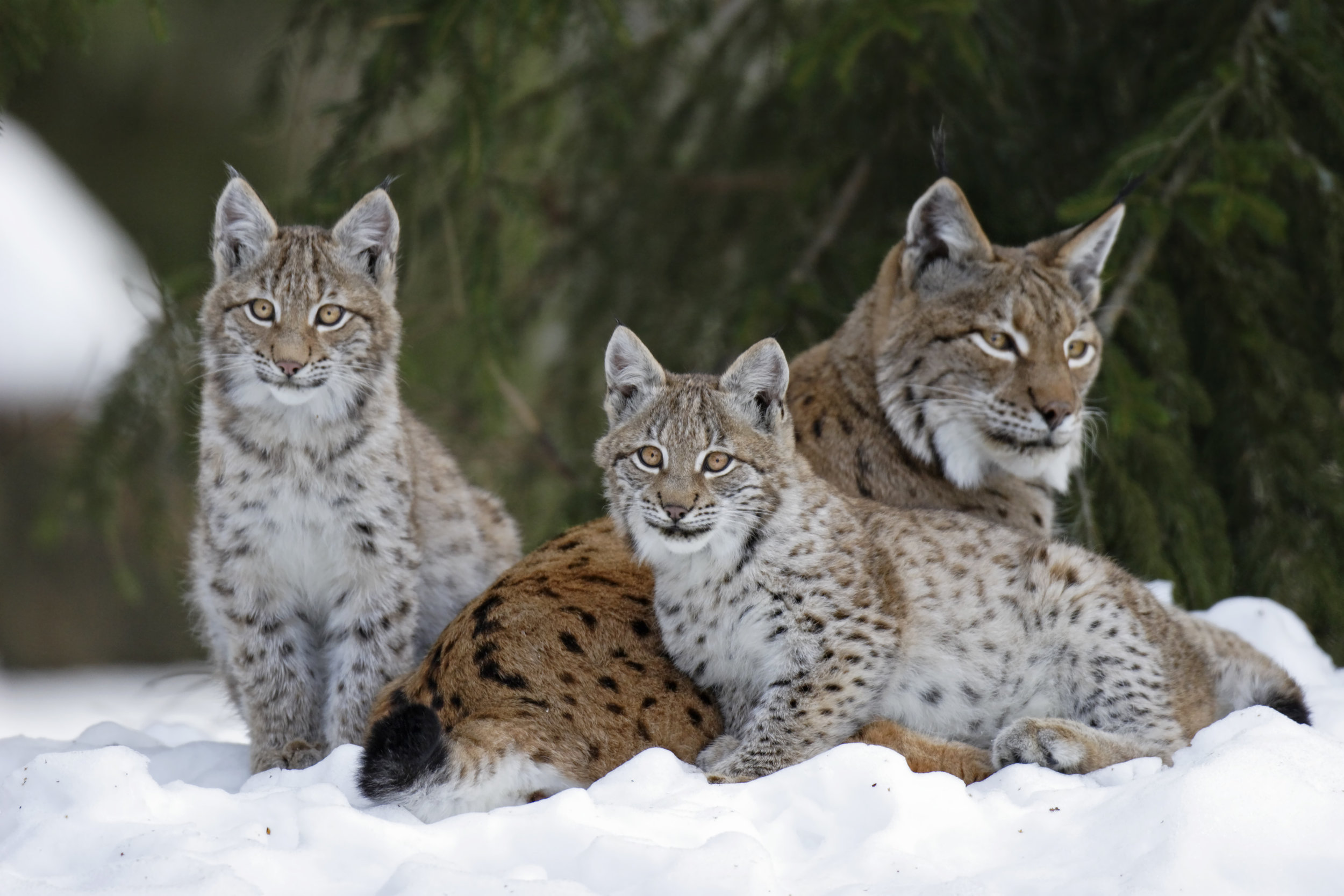
Lynx family in Sweden
Lynx in Sweden
The Eurasian lynx is Sweden’s largest wild cat and lives in forested areas across much of the country. Lynx are solitary and mostly active at night, which means they are far more often detected through tracks in snow than through direct sightings.
Lynx are extremely elusive, and very few people ever see one in the wild. Even in areas where lynx are present, encounters are rare and usually brief, making them one of the hardest mammals to observe in the wild.
Status in Sweden: The lynx population is stable in many parts of Sweden, although numbers vary locally depending on habitat conditions and wildlife management.
Estimated population in Sweden: Approximately 1,200–1,300 individuals.
🔗 This species is sometimes encountered on our wildlife tours
How to see lynx in the wild
Found in forested areas across much of Sweden
Most active at night and around dawn
Presence is usually revealed by tracks in snow
Driving quietly in open landscapes at early morning offers the best chance
Local knowledge greatly increases the chance of meaningful encounters
Facts about Lynx in Sweden
Scientific name: Lynx lynx
Length: 90 – 110 cm
Height: 60 – 75 cm (at the withers)
Weight: 20 – 28 kg (male), 15 – 20 kg (female)
Lifespan: 10 – 14 years
Population in Sweden: An estimated 1250 individuals.
Natural predators: Man (hunting + traffic)
-
Lynx are territorial animals and use large home ranges, especially males. A male lynx territory often overlaps with the territories of one or more females, while females tend to have more exclusive ranges.
Territories are marked using scent signals such as urine, faeces and scrapes on the ground. These markings help lynx communicate with neighbouring individuals and avoid unnecessary encounters. Although territories may overlap, lynx generally avoid direct contact with each other.
-
The mating season for lynx usually takes place in late winter, around February to March, when males and females call to each other over long distances.
After a gestation period of around 67–74 days, the female gives birth to one to four kittens in a well-sheltered den. The kittens stay with their mother throughout their first year, learning to hunt before becoming independent shortly before the next mating season.
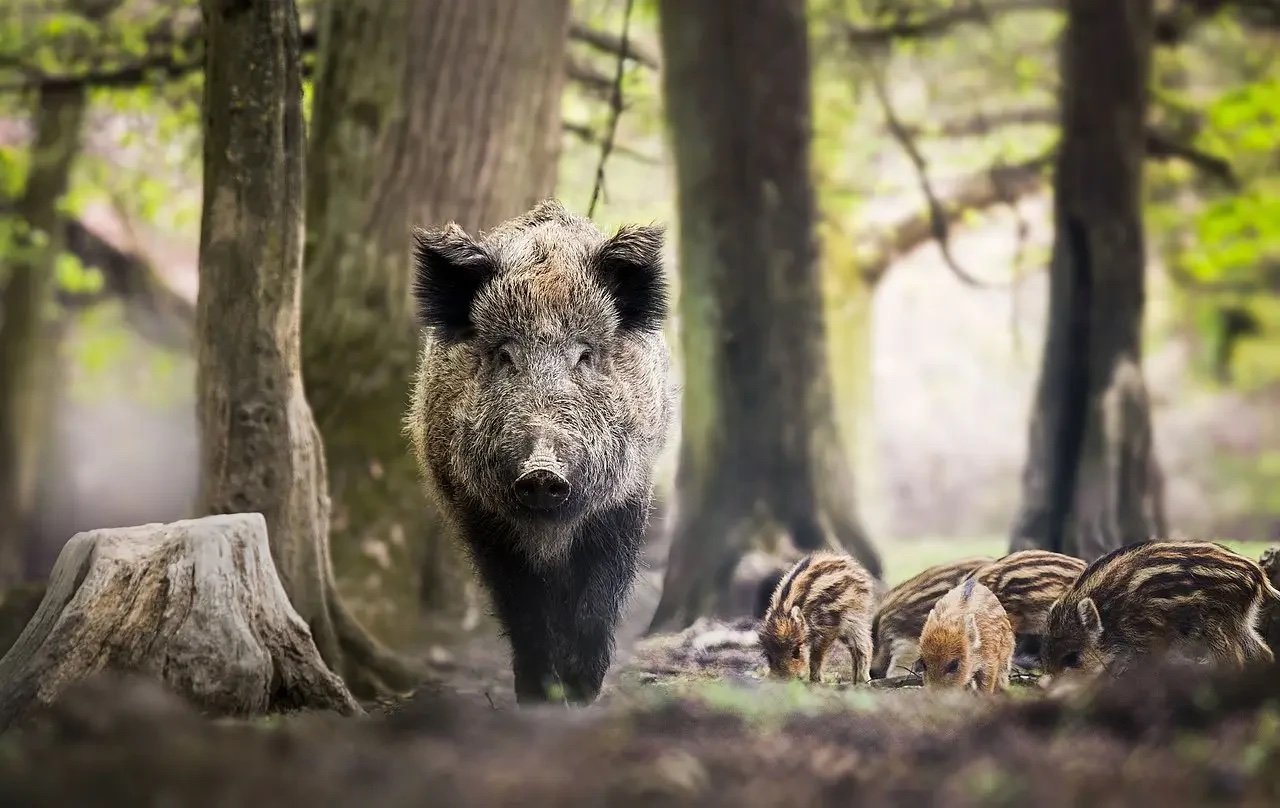
Wild Boar sow with piglets, in Sweden
Wild Boar in Sweden
Wild boar live mainly in southern Sweden, preferring forested areas mixed with farmland. They are mostly nocturnal and are rarely seen during the day, with their presence more often revealed through tracks or disturbed ground.
Wild boar are shy and usually avoid people, but they are strong animals that should be respected, especially when encountered at close range. Most encounters happen near farmland at dusk or during the night.
Status in Sweden: The wild boar population has increased rapidly in recent decades and continues to expand northwards into new regions.
Estimated population in Sweden: At least 300,000 individuals and increasing.
How to see wild boar in the wild
Found mainly in southern Sweden
Prefer forests mixed with fields and farmland
Most active at dusk and during the night
Often detected by rooting marks, tracks or disturbed soil
Local knowledge greatly increases the chance of meaningful encounters
🔗 See this species on a wildlife tour
Facts about Wild Boar in Sweden
Scientific name: Sus scrofa
Weight: 80 – 175 kg (Adult)
Body length: 55 – 100 cm
Lifespan: 15 – 20 years
Population in Sweden: The population is estimated to be at least 300,000.
Natural predators: Man (hunting + traffic), Wolf
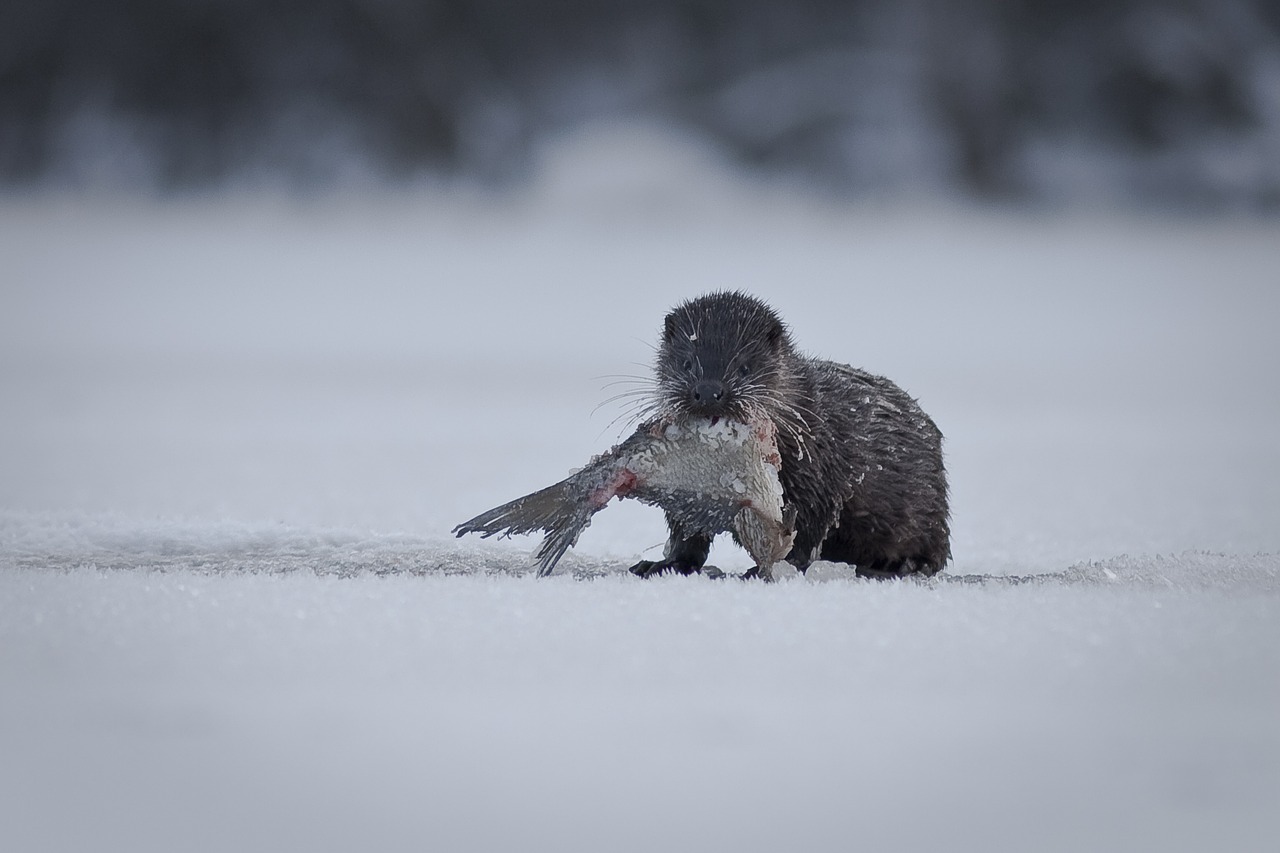
Otter in Sweden
Otters in Sweden
The Eurasian otter lives along clean rivers, lakes and some coastal areas across much of Sweden. Otters are mostly active at dawn and dusk and are more often detected through tracks, slides or feeding remains than through direct sightings.
Otters are shy animals and usually remain unnoticed even where they are present. Encounters are often brief and quiet, and patience is essential when observing otters.
Status in Sweden: After severe declines during the 20th century, the otter population is recovering and is now increasing in many parts of Sweden.
Estimated population in Sweden: Approximately 1,500–2,000 individuals.
How to see otters in the wild
Found along rivers, lakes and coastal waters
Most active at dawn and dusk
Often detected by tracks, slides or feeding remains
Winter conditions can make tracks easier to spot
Local knowledge greatly increases the chance of meaningful encounters
Facts about Otters in Sweden
Scientific name: Lutra lutra
Weight: 3 – 11 kg
Body length: 50 – 100 cm + tail 28 – 55 cm
Lifespan: Up to 22 years
Population in Sweden: 1500 – 2000
Threats: Chemicals, traffic
An adult female Otter weighs between 5 – 6 kg, an adult male weighs about twice as much. Males are about 1 meter long and the females around 90 centimeters, with the tail.
It has a sleek brown fur, which is often paler on the underside, and a long body with a thick tail and short legs. Adaptations for an aquatic lifestyle include webbed feet, the ability to close the small ears and the nose when under water, and very dense, short fur which traps a layer of air to insulate the body. Many sensitive hairs frame the snout which help the otter to locate prey.
Otters feed mainly on fish, but frogs are also an important food source. They can also eat crayfish, birds and small mammals.
The otter have a rich social life and is often playful.
Breeding can occur throughout the year; one or two cubs are usually born in a den known as a holt, and ten weeks later the cubs emerge above ground with their mother. Female Otters care for their offspring for about a year. but it may take the cubs up to 18 months to learn to fish, and females have ben observed helping this learning process by releasing live fish for the cubs to re-catch.
The Swedish Otter population is rising again after it was close to extinction in the 1950’s, which was probably due to environmental toxins and especially PCBs. It is now recovering and increasing in numbers. The population in Sweden is estimated to 1500 – 2000 individuals. Today, traffic is a bigger problem.
Wildlife FAQ – Sweden
🟢 What wild animals live in Sweden?
Sweden is home to many wild animals including moose, brown bears, wolves, lynx, beavers, wild boar, Arctic foxes and otters.
🟢 Where can I see wild animals in Sweden?
The best places to see wild animals in Sweden are forests, wetlands and river valleys – especially in central and northern regions. Join a guided wildlife tour for your best chance to see animals like moose, beavers or bears.
🟢 Are there bears in Sweden?
Yes, Sweden has about 2,800 wild brown bears. They mostly live in forested areas in central and northern Sweden, and can often be seen on guided tours in the summer.
🟢 What is the best time to see wildlife in Sweden?
Summer is ideal for seeing moose, beavers, bears and wolves. Bears are active from May to September. Wolves and lynx are elusive year-round but their tracks and howls can be experienced in winter. Moose can also be seen in Winter.
Ready to experience wildlife in Sweden?
We guide small groups into quiet forests, wetlands and remote landscapes, where wildlife encounters happen on nature’s terms — slowly, respectfully and without guarantees.
→ Get invited to our Secret Adventures 🤫 (free, invitation only)
All wild mammals found in Sweden
Looking for a complete overview of Sweden’s wild mammals? Below is a full list, grouped by category. Many of these species are difficult to see, but they all play a role in Sweden’s ecosystems.
Carnivores
Eurasian Lynx Lynx lynx
Arctic Fox Alopex lagopus
Red Fox Vulpes vulpes
Grey Wolf Canis lupus Facts about Wolf
Brown Bear Ursus arctos
Stoat Mustela erminea
Least Weasel Mustela nivalis
European Polecat Mustela putorius
Pine Marten Martes martes
Wolverine Gulo gulo
Eurasian Badger Meles meles
European Otter Lutra lutra
Grey Seal Halichoerus grypus
Common Seal Phoca vitulina
Ringed Seal Pusa hispida
Deer & Wild Boar
Red Deer Cervus elaphus
Fallow Deer Dama dama
Reindeer Rangifer tarandus
Moose/Elk Alces alces Facts about Moose
Roedeer Capreolus capreolus
Wild Boar Sus scrofa
Rodents
European Beaver Castor fiber
Eurasian Red Squirrel Sciurus vulgaris
Hazel Dormouse Muscardinus avellanarius
Northern Birch Mouse Sicista betulina
Water Vole Arvicola terrestris
Bank Vole Clethrionomys glareolus
Grey Red-Backed Vole Clethrionomys rufocanus
Northern Red-backed Vole Clethrionomys rutilus
Norway lemming Lemmus lemmus
Field Vole Microtus agrestis
Tundra Vole Microtus oeconomus
Wood Lemming Myopus schisticolor
Yellow-necked Mouse Apodemus flavicollis
Wood mouse Apodemus sylvaticus
Harvest Mouse Micromys minutus
Hares and rabbits
European Rabbit Oryctolagus cuniculus
European Hare Lepus europaeus
Mountain Hare Lepus timidus
Schrews, Moles and Soledons
Eurasian Water Shrew Neomys fodiens
Common Shrew Sorex araneus
Laxmann’s Shrew Sorex caecutiens
Taiga Shrew Sorex isodon
Eurasian Least Shrew Sorex minutissimus
Eurasian Pygmy Shrew Sorex minutus
European Mole Talpa europaea
Bats
Bechstein’s Bat Myotis bechsteini
Brandt’s Bat Myotis brandti
Pond Bat Myotis dasycneme
Daubenton’s bat Myotis daubentonii
Barbastelle Barbastella barbastellus
Northern Bat Eptesicus nilssoni
Serotine bat Eptesicus serotinus
Common Pipistrelle Pipistrellus pipistrellus
Brown long-eared bat Plecotus auritus
Parti-coloured bat Vespertilio murinus
Whales
Harbour Porpoise Phocoena phocoena
→ Get invited to our Secret Adventures 🤫 (free, invitation only)